
How Can Veterinary Clinics Protect Client and Payment Data from Cyberattacks?
Cornerstone Computer Solutions
Providing IT Services to the Healthcare Industry Since 2005!
Veterinary clinics can protect client and payment data by combining a handful of proven safeguards: secure card terminals, locked-down practice management software, unique logins with multi-factor authentication, monitored backups, and a team trained to spot scams. For clinics across Colorado, Texas, and the greater Rocky Mountain Region, that’s the practical core of veterinary clinic cybersecurity, and it’s within reach whether you run a one-doctor practice or a busy multi-doctor hospital. If you’ve been wondering whether your clinic is doing enough, this post walks through each piece in plain language, with steps your team can start on this week.
Pet owners trust you with more than their animals. Every visit adds to a record that includes names, home addresses, phone numbers, email addresses, and often a saved card for wellness plans or repeat purchases. Your clinic also tracks prescriptions, including controlled substances, and connects to online portals and pharmacy platforms that clients log into from home. Each of those touchpoints is a possible way in. And veterinary medicine has no HIPAA rulebook to follow, so many clinics never get a clear picture of which rules do apply. The real answer is a mix of payment card standards, state privacy and breach laws, and good everyday security habits.
The payoff is a clinic that keeps checking in patients, running payments, and filling prescriptions even on the day someone clicks the wrong link. Our team has supported veterinary practices since 2005 and works across more than 30 dental, veterinary, and medical software and hardware systems. That range matters in a clinic where the practice management system, digital radiography, in-house lab equipment, and payment terminals all have to talk to each other. Our veterinary IT support covers the whole setup, so a security upgrade doesn’t knock your imaging or lab results offline in the middle of a packed afternoon.
This Article Will Address
- Why criminals go after veterinary clinics
- The client information your clinic needs to protect
- What PCI compliance means for your clinic
- Keeping card payments safe at the front desk
- Securing your practice management software
- The risks that come with pet portals and online pharmacies
- How your team can avoid phishing and phone scams
- What to do after a data breach
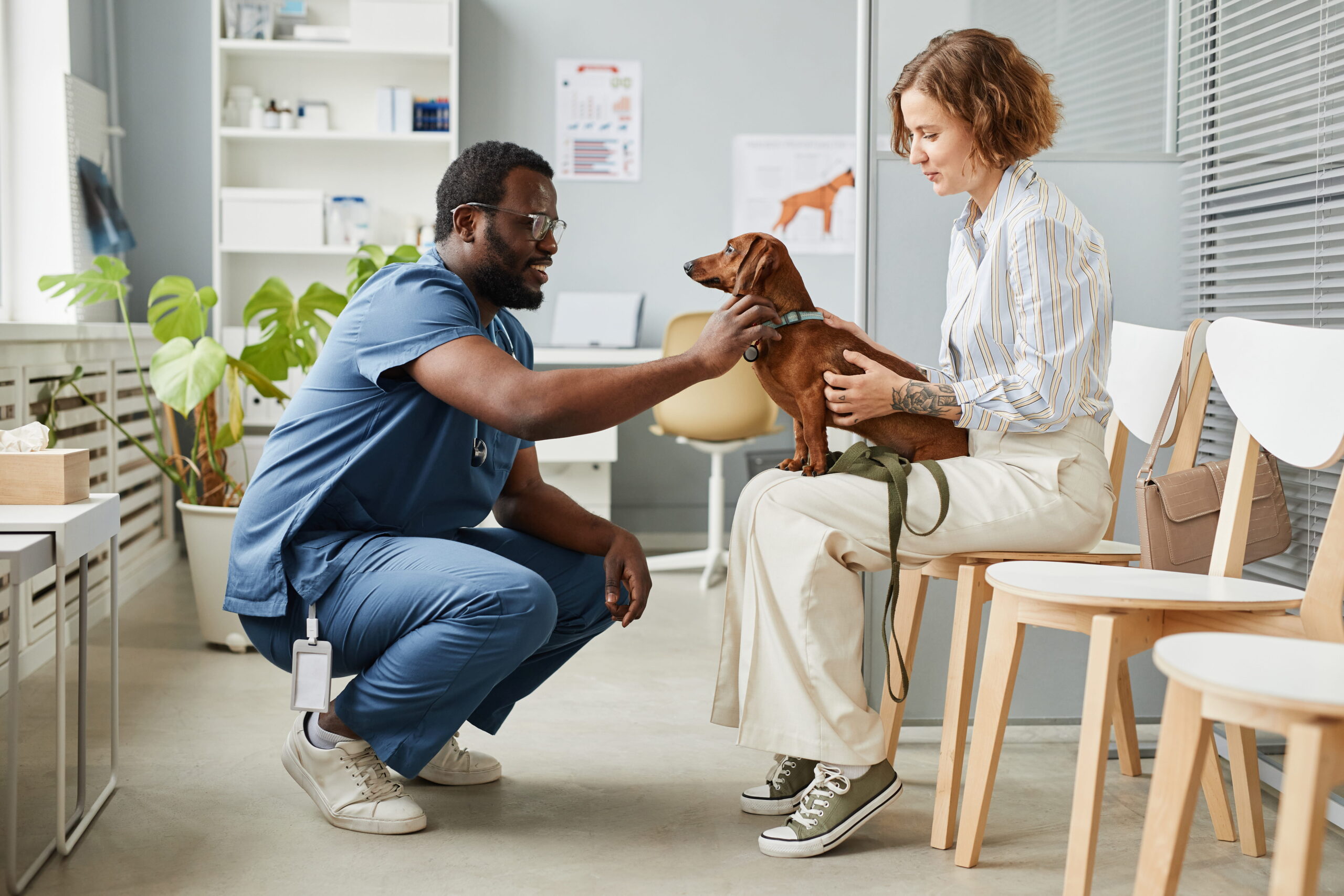
Why Are Veterinary Clinics Targeted by Cybercriminals?
Veterinary clinics are targeted because they process a steady stream of card payments, store personal client information, and usually run on a small IT budget. To an attacker, that’s a lot of value behind fewer locks. Most attacks aren’t personal. Automated tools sweep the internet for unpatched remote access, weak passwords, and outdated software, then break into whatever they find. Regular software updates for servers and workstations close many of those openings before anyone finds them. Clinics also make tempting ransomware targets because downtime hurts right away. When the practice management system goes dark, the front desk can’t check in appointments, doctors can’t see medical histories, and emergency cases still keep coming through the door. That pressure is exactly what criminals count on.
What Types of Client Data Do Veterinary Clinics Need to Protect?
Veterinary clinics need to protect any information that could identify a client or be used for fraud. That covers more than most teams expect:
- Client names, home addresses, phone numbers, and email addresses
- Payment card details, saved cards, and wellness plan billing information
- Login credentials for client portals and online pharmacy accounts
- Prescription records, including controlled substance logs
- Employee records, payroll data, and tax forms
- Patient medical records, which many state veterinary practice laws treat as confidential
A pet’s medical history may not seem sensitive on its own, but it’s tied to an owner’s identity and contact details. Paired with a saved card or a portal login, that record becomes useful for phishing, account takeover, and payment fraud.
What Is PCI Compliance, and Does It Apply to Veterinary Clinics?
PCI compliance means following the Payment Card Industry Data Security Standard (PCI DSS), and it applies to every veterinary clinic that accepts credit or debit cards. The standard is maintained by the PCI Security Standards Council and covers any business that stores, processes, or transmits cardholder data. It’s a contractual requirement set by the card brands and your payment processor, not a law, but failing it can bring fines, higher processing fees, or the loss of your ability to take cards at all. Most clinics validate compliance each year with a self-assessment questionnaire from their processor. Which questionnaire you complete depends on how card data flows through your clinic, which is why the front desk setup matters so much. PCI DSS 4.x, the current version, expects security to be maintained all year long.
How Can Veterinary Clinics Secure Card Payments at the Front Desk?
The best way to secure front desk payments is to keep card data out of your computers entirely. When card numbers never touch your network, there’s far less to steal and far less to prove during your PCI review. Practical steps include:
- Use chip-enabled terminals and avoid typing card numbers into the computer by hand
- Ask your processor about point-to-point encryption, which scrambles card data inside the terminal
- Use tokenization for saved cards so your system stores a stand-in value instead of the real number
- Never write card numbers on paper or save them in a notes field
- Keep payment terminals on a separate network from guest Wi-Fi
- Check terminals for tampering and change any default passwords
Text-to-pay and online payment links help too, since clients enter their own card details on the processor’s secure page.
How Should a Clinic Protect Its Veterinary Practice Management Software?
Protect your practice management software with unique logins, role-based permissions, multi-factor authentication, and regular updates. Shared front desk logins are common in busy clinics, but they make it impossible to tell who did what, and they let a former employee’s password linger long after they’ve gone. Give each person their own account, limit access to what the role needs, and remove accounts the day someone leaves. If your software runs on an in-clinic server, that server needs a firewall, endpoint protection, monitored backups, and tightly controlled remote access. Cloud-based systems shift some of that work to the vendor, but your team’s logins and devices are still your responsibility. We pair 24/7 antivirus management with network monitoring so unusual activity gets caught early instead of days later.
Are Online Pet Portals and Pharmacy Platforms a Security Risk?
Online pet portals and pharmacy platforms do add some risk, mostly through client logins and the connections between those platforms and your clinic’s system. They’re still worth offering. Clients often reuse passwords from other sites, so a breach somewhere else can hand an attacker the keys to a portal account. Integrations between your practice management software and an outside vendor can also expose data if they’re set up loosely. Before turning on a new platform, ask the vendor how they protect data, whether they support multi-factor authentication, and how they’ll tell you about a breach. Review which staff accounts have admin access to each portal, and switch off integrations you no longer use. Treat every outside platform as an extension of your own network, because to an attacker, it is one.
How Can Veterinary Teams Avoid Phishing and Social Engineering Attacks?
Veterinary teams avoid phishing and social engineering by confirming unusual requests through a second channel before acting on them. Scammers often pose as a distributor, a reference lab, a pharmacy vendor, or the practice owner asking for a quick favor. Some call the front desk pretending to be a client and fish for account details. Others email a fake invoice with new bank information attached. Short, regular training sessions help staff recognize urgent language, mismatched sender addresses, and unexpected attachments. Just as important is one simple rule everyone knows by heart: payment changes, password resets, and requests for client information always get confirmed by calling a number already on file. Staff training is part of the layered security approach we bring to every clinic we support.
What Should a Veterinary Clinic Do After a Data Breach?
After a data breach, a veterinary clinic should stop the damage, investigate, and notify the right people, in that order. The first hour sets up everything that follows:
- Disconnect affected computers from the network, but leave them powered on
- Call your IT provider so evidence is preserved and the cause is found
- Change passwords, starting with email and admin accounts
- Contact your payment processor if card data may be involved
- Talk with legal counsel about state breach notification laws, some of which set deadlines as short as 30 days
- Notify affected clients with clear steps they can take to protect themselves
Document what you find and what you do along the way. Recovery planning is part of the IT services we provide to veterinary clinics, so you have a written plan long before you ever need one.
Book a Free Security Review for Your Veterinary Clinic
Your clients trust you with their pets, their contact details, and their payment information. Cornerstone Solutions helps veterinary clinics across Colorado, Texas, and the greater Rocky Mountain Region protect all of it with secure payment setups, monitored systems, and staff training. We’re welcoming new clinics now, and owners Jordan Janz and Dana Van Stelle lead a team that’s glad to talk through your setup. Start with a free IT assessment by phone, email, or our website form, and reach out to our team today.
Sources
We are Here to Help!
Peace of mind is essential. Any time you need us, we’re just a click or call away.
Sign Up for Our Newsletter!
Don’t miss our quarterly newsletter. Sign up today!